Deepest Plane Facelift in Istanbul: A Guide for UK Patients
What the Deepest Plane Facelift is, how it differs from skin-tightening and SMAS lifts, who it suits, and how UK patients plan surgery, recovery and the journey home.
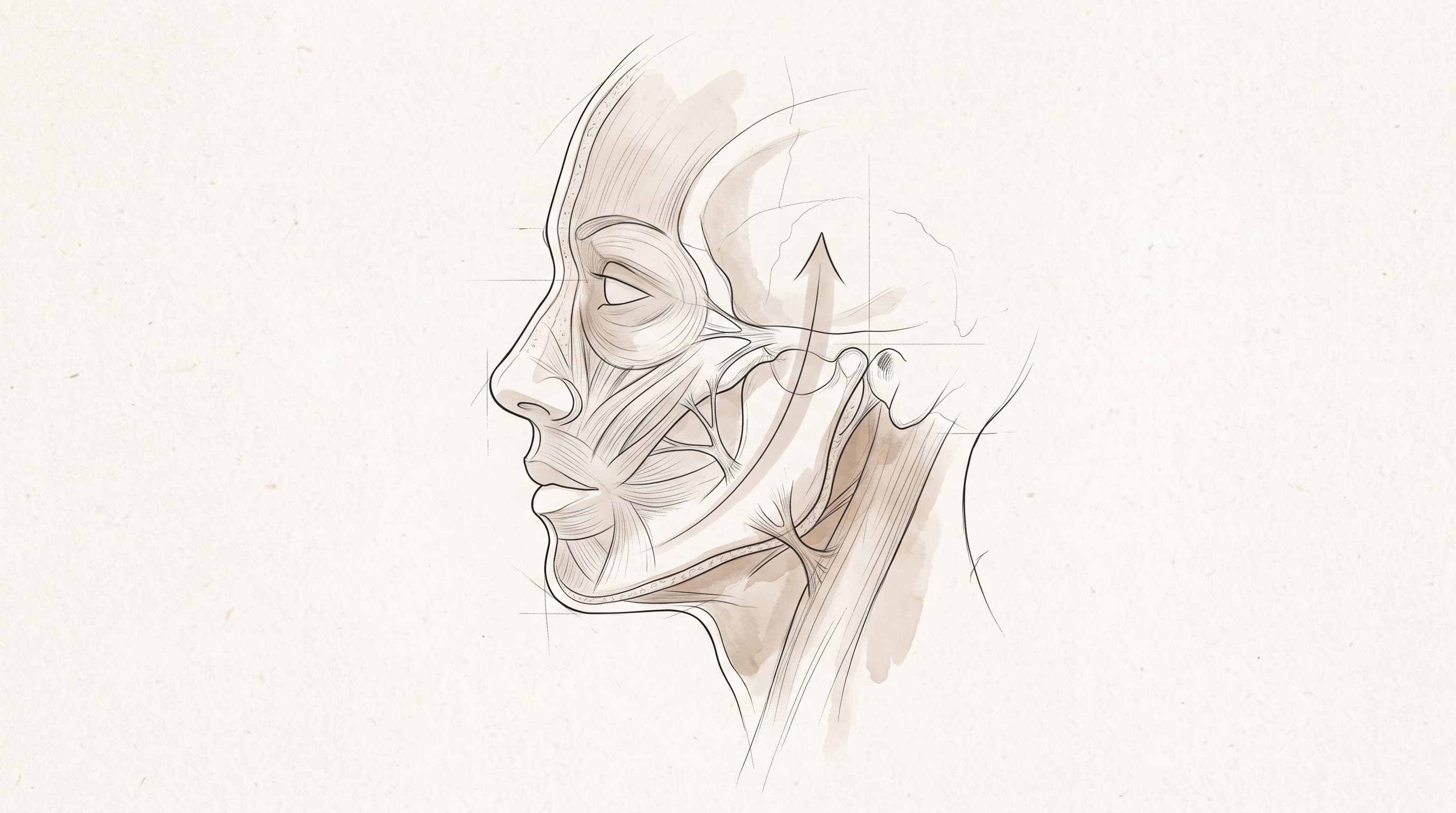
If you have been researching a deep plane facelift in Turkey, you will have noticed that almost every clinic now uses the phrase. It has become shorthand for a natural-looking facelift, and that makes it harder, not easier, to compare surgeons. This guide explains what Prof. Dr. Erdem Tezel means by the Deepest Plane Facelift, how it differs from a skin-tightening or SMAS lift, who tends to be a good candidate, and what UK patients should expect from planning, surgery and recovery in Istanbul.
Why a facelift can look 'done'
The face is built in layers: skin, a layer of fat, a fibrous muscular layer called the SMAS (superficial musculoaponeurotic system), and deeper retaining ligaments that tie the soft tissues to the bone. With age those ligaments loosen. The cheek fat slides down, the jawline softens into jowls and the folds beside the nose and mouth deepen.
Older facelift techniques worked mainly on the surface. Pulling skin towards the ear smooths wrinkles for a while, but it does not move what has actually descended. Skin under tension stretches again, scars can widen, and the face can take on the windswept, pulled look that puts many people off facelift surgery altogether.
Deep plane facelift vs SMAS facelift vs Deepest Plane
The terms are used loosely online, so it helps to see them side by side. The table below describes the general principles; the exact technique varies from surgeon to surgeon.
| Feature | Skin-only lift | SMAS facelift | Deepest Plane Facelift |
|---|---|---|---|
| What is lifted | Skin | SMAS tightened from above, often folded or trimmed | Skin, fat and SMAS together as one unit |
| Retaining ligaments | Left in place | Usually left attached | Released so the tissues can move |
| What holds the result | Skin tension | SMAS tension | The deep layer; skin is closed without tension |
| Effect on midface and nose-to-mouth folds | Minimal | Moderate | More direct, because the cheek tissues are repositioned |
| Risk of a pulled look | Higher | Moderate | Lower, when performed well |
We cover the anatomy in more depth in Deepest plane vs. SMAS facelift. The short version: a Deepest Plane Facelift goes past the SMAS to the deepest plane of the face, releases the ligaments that hold the tissues down and lifts skin, fat and muscle as a single composite unit. Because that deep layer carries the load, the skin can be redraped rather than stretched.
How Prof. Tezel approaches the Deepest Plane Facelift
A three-dimensional, vertical lift
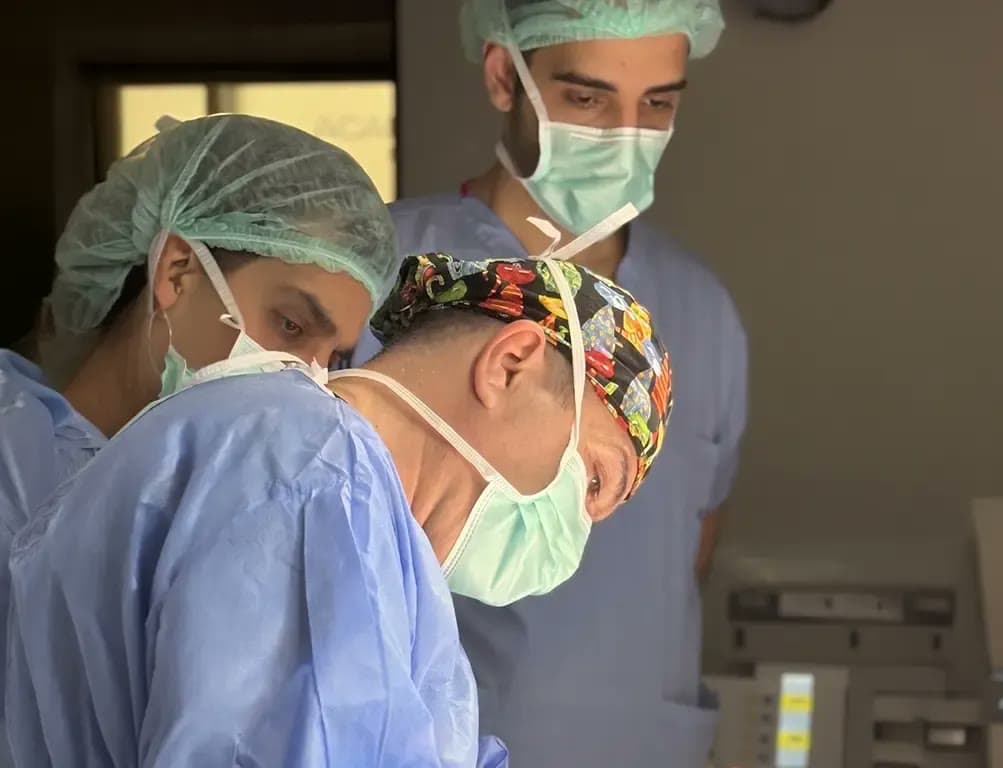
Prof. Tezel introduced endoscopic facial surgery to Türkiye after a clinical fellowship in Baltimore with Dr. Oscar Ramirez, one of the pioneers of endoscopic facial rejuvenation, and has practised it for more than 25 years. His facelift philosophy comes from that work: the face is lifted mainly upward and slightly outward, rather than sideways towards the ears, and the face is treated as a whole rather than one feature at a time.
Combined with an endoscopic brow and midface lift when needed
For many patients, the Deepest Plane lift of the lower face and neck is combined with an endoscopic lift of the brow and midface. This is carried out through incisions of about 1.5 cm within the hair, using a camera thinner than a pencil, so that the brows, the outer corners of the eyes and the cheeks rise together.
Lifting deep tissues through small incisions depends on stitches that can be adjusted and then locked securely. Prof. Tezel co-authored, with Dr. Ramirez, a description of an adjustable self-locking sliding knot used for exactly this purpose in endoscopic face lifting: The Peruvian Fisherman's Knot, Annals of Plastic Surgery, 2009. The authors note that its security was judged from clinical experience rather than laboratory testing, but it illustrates the level of detail that goes into a lift designed to look natural.
The neck is planned with the face
A youthful face needs a clear angle between the jaw and the neck. Depending on your anatomy, the facelift may be combined with tightening of the platysma muscle through a short incision under the chin, removal of deep fat or liposuction. Our neck lift page explains the options.
Who is a good candidate?
A Deepest Plane Facelift is usually considered for people who have:
- ·Sagging cheeks and deepening folds between the nose and mouth
- ·Jowls and a softened, irregular jawline
- ·Loose skin or visible bands in the neck
- ·A tired or sad expression caused by descending brows and midface
Most patients are between their mid-forties and their seventies. If your main concern is an early descent of the brows or cheeks rather than loose skin, a less extensive procedure such as endoscopic facial contouring may be more appropriate. Good general health is essential, and smoking or vaping must stop well before surgery because nicotine reduces blood flow to healing skin.
It may not be the right choice if you have uncontrolled medical conditions, are unable to take enough time off for recovery, or are hoping for a result that looks dramatically different rather than refreshed. Prof. Tezel will recommend the least invasive option that can achieve your goal.
Incisions and scars
Incisions run inside the hairline at the temples and follow the natural contours in front of and behind the ear. The hair is not shaved. When an endoscopic component is added, its small access points are hidden in the scalp. Because the closure carries little tension, scars usually heal as fine lines, although how a scar matures always depends partly on your own skin.
Preparing for surgery
Good preparation makes recovery smoother and safer. Before a Deepest Plane Facelift you will usually be asked to:
- ·Stop smoking and vaping, including nicotine replacement, for the period your surgeon advises before and after surgery
- ·Review any blood-thinning medicines and supplements, such as aspirin, fish oil or vitamin E, with your surgeon and GP; never stop prescribed medication without medical advice
- ·Share your full medical history, including blood pressure, diabetes, previous clotting problems and any previous facial surgery or filler
- ·Arrange time off work and someone to help you for the first days at home
- ·Keep your weight stable in the months before surgery
Blood pressure control is particularly important, because raised blood pressure after a facelift is one of the factors linked to bleeding under the skin. Your anaesthetist will review this with you before the operation.
Combining a facelift with other procedures
Ageing rarely affects one area alone, so many patients ask whether a facelift can be combined with eyelid surgery, a brow lift or rhinoplasty. Combining procedures means one anaesthetic and one recovery period, and it allows the face to be planned as a whole. The trade-off is a longer operation and usually a few extra days in Istanbul. Whether a combination is sensible depends on your health, the total operating time and what you want to achieve, and it is decided at consultation rather than added at the last minute.
Planning a Deepest Plane Facelift from the UK
Most UK patients start with photographs and a video consultation. The NHS advises anyone considering cosmetic surgery abroad to have two consultations with the surgeon before surgery, to allow a cooling-off period, and to check the surgeon's training and experience. We agree with that advice and build it into the process.
- 01Photographs and medical history. Front, side and three-quarter views, plus details of any previous facial surgery or treatments.
- 02Video consultation. Prof. Tezel reviews your concerns, explains what is realistic and outlines a plan.
- 03Written quote. You receive a written plan and quote before booking travel. Fees depend on the surgical plan, and what is included is set out in writing.
- 04In-person consultation in Istanbul. The plan is confirmed face to face before surgery, with time to ask further questions.
- 05Surgery and recovery in Istanbul. Plan for 12 to 14 days in total.
- 06Remote follow-up after you return home.
Our UK patients page and the guide to planning facial surgery in Istanbul cover travel, accommodation and what to bring.
Recovery, step by step
| Time after surgery | What usually happens |
|---|---|
| Night 1 | One night in hospital; dressings checked the next morning |
| Days 5 to 7 | Stitches in front of the ear removed |
| Days 10 to 14 | Most bruising settled; check-up before you are cleared to fly |
| Weeks 2 to 3 | Return to work and social life, with light make-up if needed |
| Months 3 to 6 | Residual swelling and tightness resolve |
| Months 6 to 12 | The final result matures |
The NHS recommends not flying for 7 to 10 days after facial cosmetic procedures, because surgery and air travel both raise the risk of blood clots. For a Deepest Plane Facelift, Prof. Tezel usually clears patients to fly after a check-up between day 10 and day 14.
How long does a Deepest Plane Facelift last?
No operation stops time. Because the Deepest Plane approach repositions the deep layer of the face instead of stretching skin, results are typically long-lasting, and the face continues to age gently from its new starting point. Sun protection, a stable weight and not smoking all help the result last.
Risks and honest expectations
A facelift is major surgery under general anaesthesia, usually taking four to six hours. Possible complications include haematoma (a collection of blood under the skin), temporary numbness, temporary weakness of facial movement, visible scarring, asymmetry and hair thinning near the incisions. Working in the deepest plane requires detailed anatomical knowledge, and experience is what keeps these risks low. Every risk is discussed with you before you decide, and results vary from person to person.
01Is a Deepest Plane Facelift the same as a deep plane facelift?
It belongs to the same family of techniques. Prof. Tezel uses the name Deepest Plane Facelift for his approach, in which the dissection continues beneath the SMAS to the retaining ligaments and the tissues are lifted vertically as one unit, often together with an endoscopic brow and midface lift.
02Will I look pulled or different?
The aim is the opposite. Because the deep layer carries the lift and the skin is closed without tension, the connection between the facial muscles and the skin is preserved, so you should look rested and recognisably yourself.
03How long should I plan to stay in Istanbul?
Plan for 12 to 14 days. Stitches are removed in stages during the first week and you are checked before you are cleared to fly home.
04Can I combine a facelift with eyelid surgery or rhinoplasty?
Often, yes, when it is safe to do so. Combined procedures can extend your stay in Istanbul by a few days, and the plan is agreed at consultation.
05When can I go back to work?
Most patients return to work and social life after about two to three weeks, depending on the nature of their work and how quickly bruising settles.
06Can I be assessed before travelling?
Yes. Send photographs and your medical history for an initial review and a video consultation. The plan is then confirmed in person in Istanbul before surgery.
Next step
If you are considering a facelift, the most useful first step is an honest assessment of what is actually causing the changes you see. Send your photographs for review and arrange a video consultation, and read more about the Deepest Plane Facelift.
Results vary between individuals. The information on this website is for general guidance and does not replace a personal medical consultation. Surgery carries risks, which are discussed before any decision. A consultation is required to determine suitability.