Neck Lift Surgery: Types, Results and Recovery
Not every neck needs the same operation. How neck lift surgery is matched to skin, fat and muscle, what recovery involves, and when a facelift should be part of the plan.
Neck lift surgery is often discussed as if it were one operation, but an ageing neck can change for several different reasons: loose skin, fat under the chin, the platysma muscle separating into visible bands, or a small chin that softens the jawline. The right treatment depends on which of these is responsible. This guide explains the main options, how Prof. Dr. Erdem Tezel decides between them, and what UK patients can expect from recovery in Istanbul.
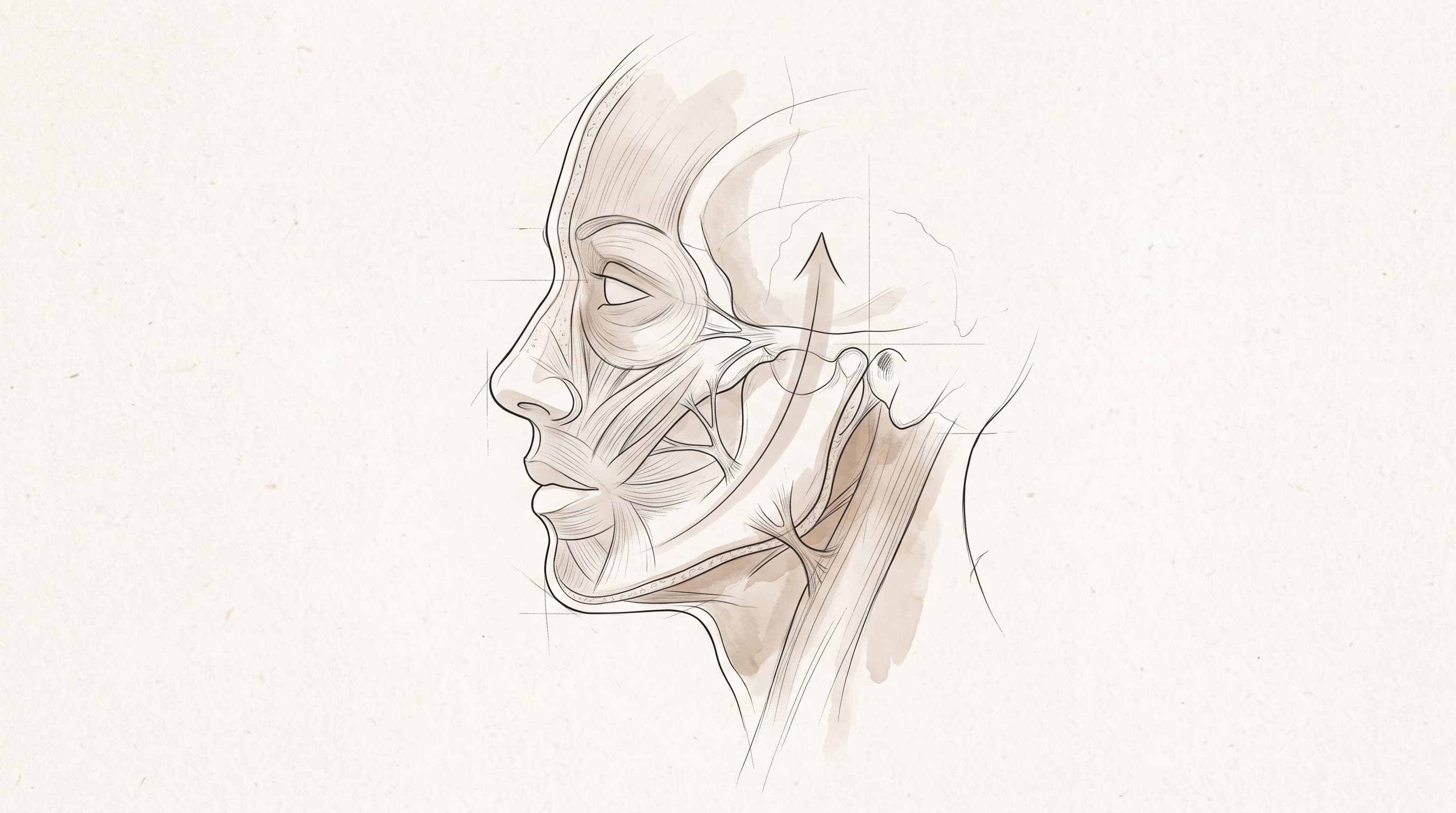
Why the jaw-neck angle matters
A youthful neck meets the face at a clear angle along the jaw, and this transition is naturally sharper in men. As we age, that angle blurs. Tightening the neck on its own is rarely enough to look younger, because the eye reads the jawline, cheeks and neck as one. That is why Prof. Tezel always plans the neck as a continuation of the face.
Types of neck lift surgery
| Option | Best suited to | How it is done |
|---|---|---|
| Neck liposuction | A full neck where the main issue is fat under the skin, with good skin elasticity | Small access incisions; fat removed by suction |
| Platysma tightening | Visible vertical bands and fullness under the chin | Short incision hidden under the chin; deep fat removed and the muscle edges sutured together |
| Neck lift | Significant loose skin | Incision around the ear; skin and muscle lifted and redraped |
| Chin refinement | A small or receding chin that blurs the angle | Chin implant or fat transfer |
Neck liposuction
When the main problem is fat beneath the skin and the skin still has good elasticity, liposuction alone can sharpen the angle. It is the least invasive option, but it cannot correct loose skin or muscle bands.
Platysma tightening
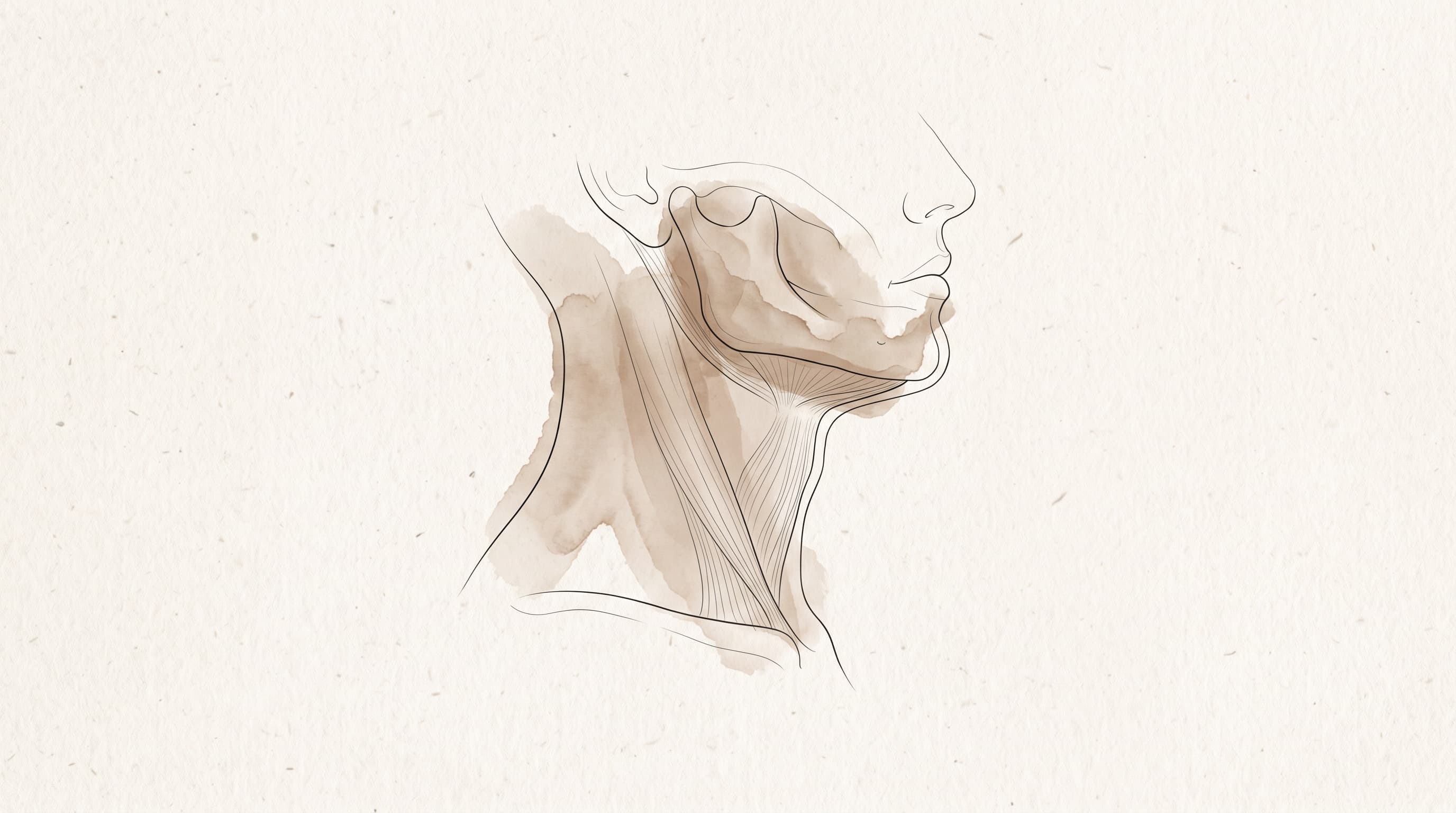
The platysma is a thin sheet of muscle at the front of the neck. With age its inner edges can separate and form two visible cords. Through a short incision hidden under the chin, deep fat can be removed and the muscle edges stitched together, which smooths the bands and defines the area under the jaw.
A formal neck lift
When skin laxity is significant, an incision around the ear allows the skin and muscle to be lifted and redraped. This is where neck surgery overlaps with facelift surgery, and the two are frequently performed together.
Chin refinement
Sometimes the neck is not the real problem. A small chin can make the angle look soft even in a slim neck. Enlarging the chin with an implant or fat transfer can define the angle on its own or add to other neck work.
Neck lift or facelift?
If the main issue is fat or muscle bands and the jawline is still well defined, a neck procedure alone may be enough. When the jowls and cheeks have also descended, lifting only the neck can leave the lower face looking out of proportion. In that case a Deepest Plane Facelift, which treats the lower face and neck together, usually gives a more coherent result. Our guide to the Deepest Plane Facelift in Istanbul explains that option in detail.
How Prof. Tezel plans neck surgery
Rather than applying one operation to every neck, Prof. Tezel assesses the skin, fat, muscle and chin separately, then chooses the smallest combination of procedures that addresses each. An endoscopic lift of the brow and midface can also improve the definition of the jawline, so the whole face is considered before the neck is planned. You can read more on the neck lift treatment page.
Is a non-surgical option enough?
Non-surgical treatments, such as injectable treatments for neck bands or energy-based devices for skin tightening, can help with mild changes and are worth considering if you are not ready for surgery. They cannot remove significant loose skin or repair separated muscle edges, and their effects are usually temporary. An honest consultation should tell you whether surgery is likely to make a meaningful difference, or whether a smaller step makes more sense for now.
Preparing for neck surgery
- ·Stop smoking and vaping for the period your surgeon advises before and after surgery
- ·Review blood-thinning medicines and supplements with your surgeon and GP; never stop prescribed medication without medical advice
- ·Aim for a stable weight before surgery, because significant weight change afterwards can affect the result
- ·Share your full medical history, including blood pressure and any previous neck or facial procedures
- ·Arrange loose, front-opening clothing for the first days, so you do not have to pull tops over your head
Anaesthesia, surgery and your stay
- ·Surgery time: usually 1.5 to 3 hours, depending on what is combined
- ·Anaesthesia: local anaesthesia with sedation, or general anaesthesia when combined with other procedures
- ·Hospital stay: same day or one night
- ·Time in Istanbul: 7 to 10 days
- ·Back to work: usually 10 to 14 days
- ·Final result: 3 to 6 months
Recovery after a neck lift
| Time after surgery | What usually happens |
|---|---|
| First days | A compression garment is worn; swelling and tightness are normal; rest with your head raised |
| End of week 1 | Stitches checked or removed; most patients are cleared to fly after their post-operative review |
| Weeks 2 to 3 | Return to work and normal daily activities; avoid strenuous exercise until advised |
| Months 1 to 3 | Swelling and firmness under the chin gradually settle |
| Months 3 to 6 | The final contour of the neck becomes clear |
For advice on the journey home, read when you can fly home after facial surgery.
Risks
Possible risks of neck surgery include bleeding or haematoma, infection, temporary numbness of the neck skin, irregularities after liposuction, asymmetry, visible scarring and temporary weakness of the muscles that move the lower lip. Most of these are uncommon and many are temporary, but they are discussed with you in detail before surgery. Results vary between individuals, and skin quality has a large influence on the outcome.
01Can a neck lift be done under local anaesthesia?
Yes. Many neck procedures can be performed under local anaesthesia with sedation. General anaesthesia is used when the neck is treated together with a facelift or other operations.
02Do I need a facelift as well as a neck lift?
Not always. If the main concern is fat or muscle bands, a neck procedure alone may be enough. If the jowls and cheeks have also descended, combining the neck with a facelift usually looks more natural.
03Will I have visible scars?
Incisions are placed under the chin and, for a formal neck lift, around the ear, where they are usually well hidden once healed. Liposuction needs only small access points.
04How long do the results of a neck lift last?
Tightened muscle and removed fat give a long-lasting improvement, but the skin continues to age naturally. A stable weight and sun protection help the result last.
05How long should I stay in Istanbul?
Plan for 7 to 10 days, depending on the procedures performed. You are checked before being cleared to fly.
Next step
The right neck procedure depends on what is actually causing the change. Send front and side photographs, including a profile view with your head level, for review and a video consultation.
Results vary between individuals. The information on this website is for general guidance and does not replace a personal medical consultation. Surgery carries risks, which are discussed before any decision. A consultation is required to determine suitability.