
Why some noses need a second operation, and how they are rebuilt
A dropped tip, a pinched bridge, a nose that no longer breathes. Prof. Dr. Erdem Tezel explains why primary rhinoplasty fails and how revision surgery restores structure.

An operated nose can disappoint for many reasons. The bridge may have been carved too deeply. The tip may have dropped, or been turned up so far that the nostrils show. The nose may be too short or too long for the face, or the bony upper part and the cartilaginous tip may look like two separate pieces. Sometimes the problem is subtler: a small detail that tells everyone the nose has been operated on.
Most patients who come to me for a second operation describe the same complaint: a tip that has fallen, or a tip that is out of proportion with the rest of the nose. Viewed from the side, visible nostrils are among the most disturbing features.
The common cause: lost support
The lower half of the nose stands on the septum, the cartilage wall that divides the nose. When the septum is weakened, shortened or left without a firm connection to the tip, the tip slowly falls, and every smile pulls it further down. Removing more tissue cannot fix that. The support has to be rebuilt.
Rebuilding the column
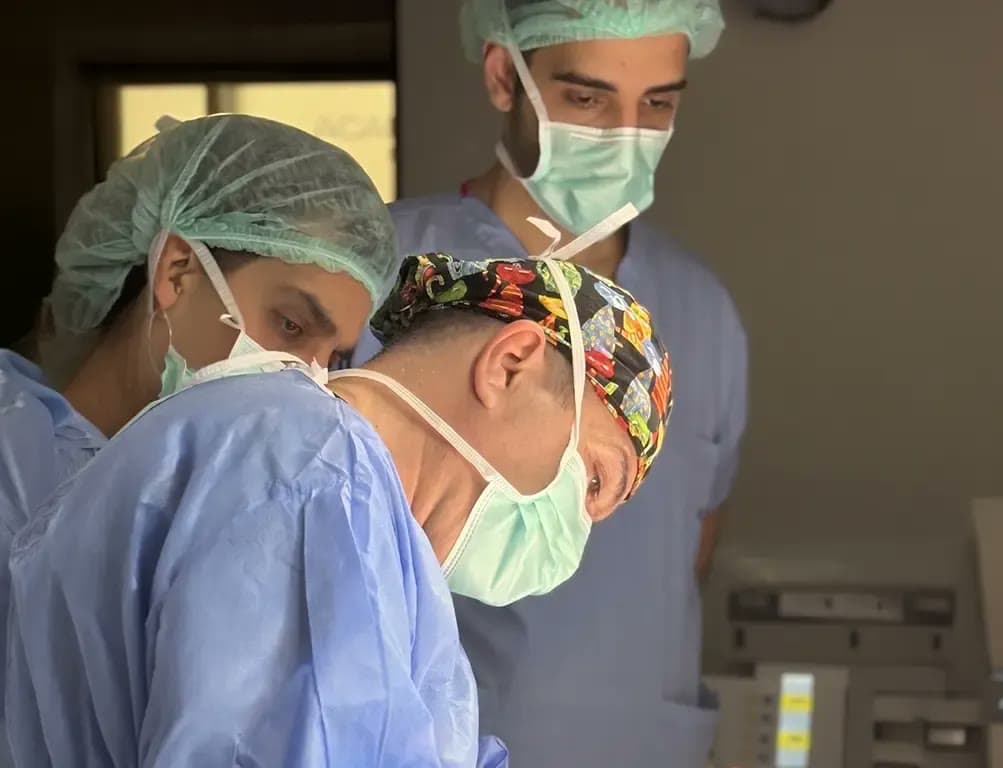
In revision surgery I first restore the septum, using grafts of the patient's own cartilage cut in a stair-step pattern so they lock into the existing structure. Then the tip cartilages are fixed onto this column with the septocolumellar suture, a scarless technique I developed and published in the Annals of Plastic Surgery. The sutures are placed entirely inside the nose and give the tip its height and angle without an external incision.
“Many surgeons decline to correct an operation performed by a colleague. These are often the noses that benefit most from a structural approach.”
Shape and breath together
Success in nasal surgery cannot be separated from breathing. The same structural work that supports the tip also keeps the nasal valves open, so many revision patients breathe better than they have in years. In some well-selected cases, even a small correction under local anaesthesia is enough.
Learn more about revision rhinoplasty at Tezel Clinic, or send us your photographs for an initial assessment.
This article is for general information and does not replace a personal medical consultation.