Closed Rhinoplasty: The Complete Guide to Tip-Oriented Nose Surgery
A complete guide to closed rhinoplasty: the anatomy behind it, how a tip-oriented operation works, who is a good candidate, recovery week by week and the questions worth asking.
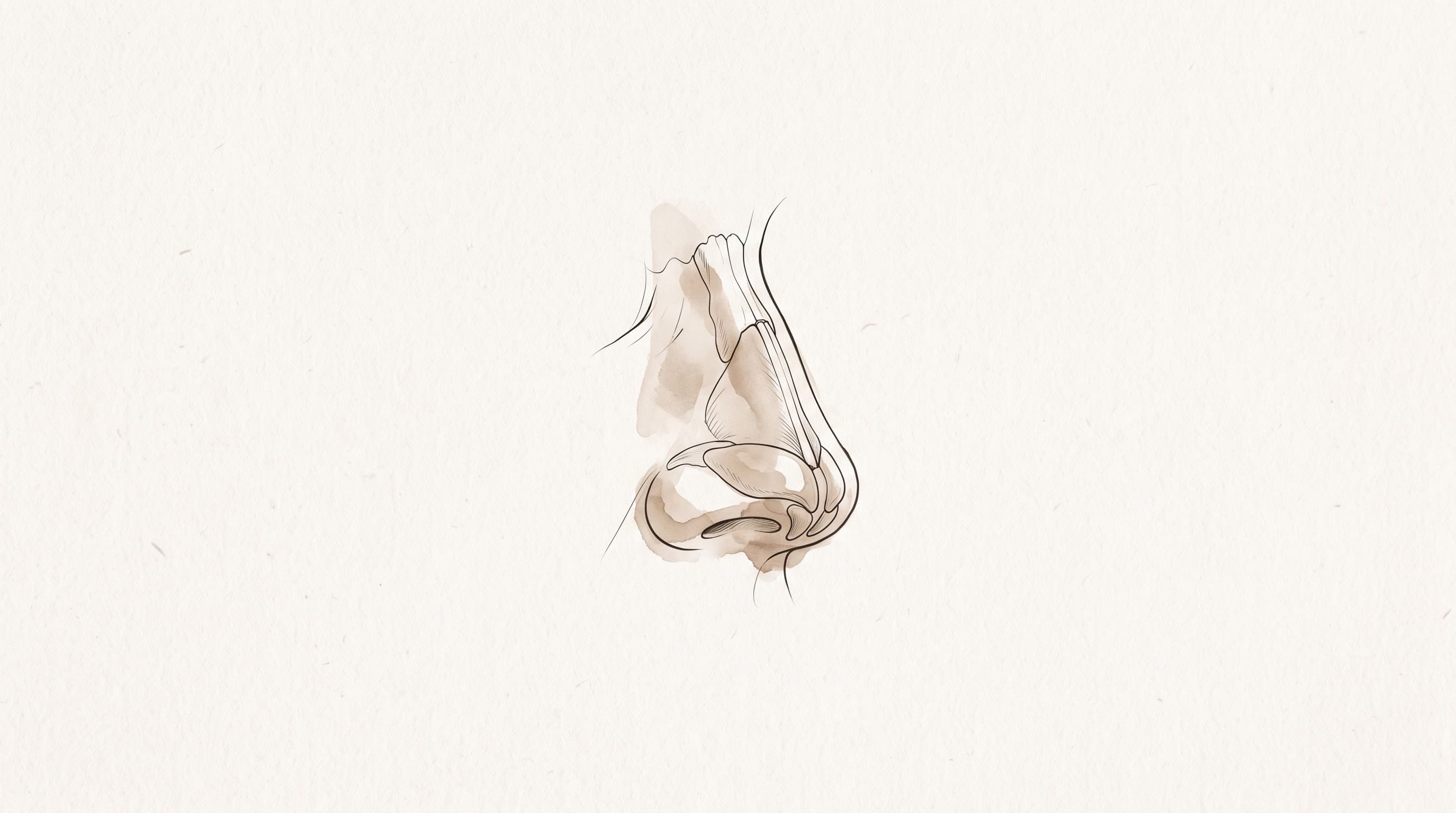
Closed rhinoplasty is nose surgery performed entirely through incisions inside the nostrils, with no cut across the skin between them. It is also called endonasal rhinoplasty. Every operation leaves scars, but in a closed rhinoplasty they are all inside the nose. This guide explains how closed rhinoplasty works, why Prof. Dr. Erdem Tezel builds the operation around the nasal tip rather than the hump, who tends to be a good candidate, what recovery looks like week by week, and what the technique cannot do.
What is closed rhinoplasty?
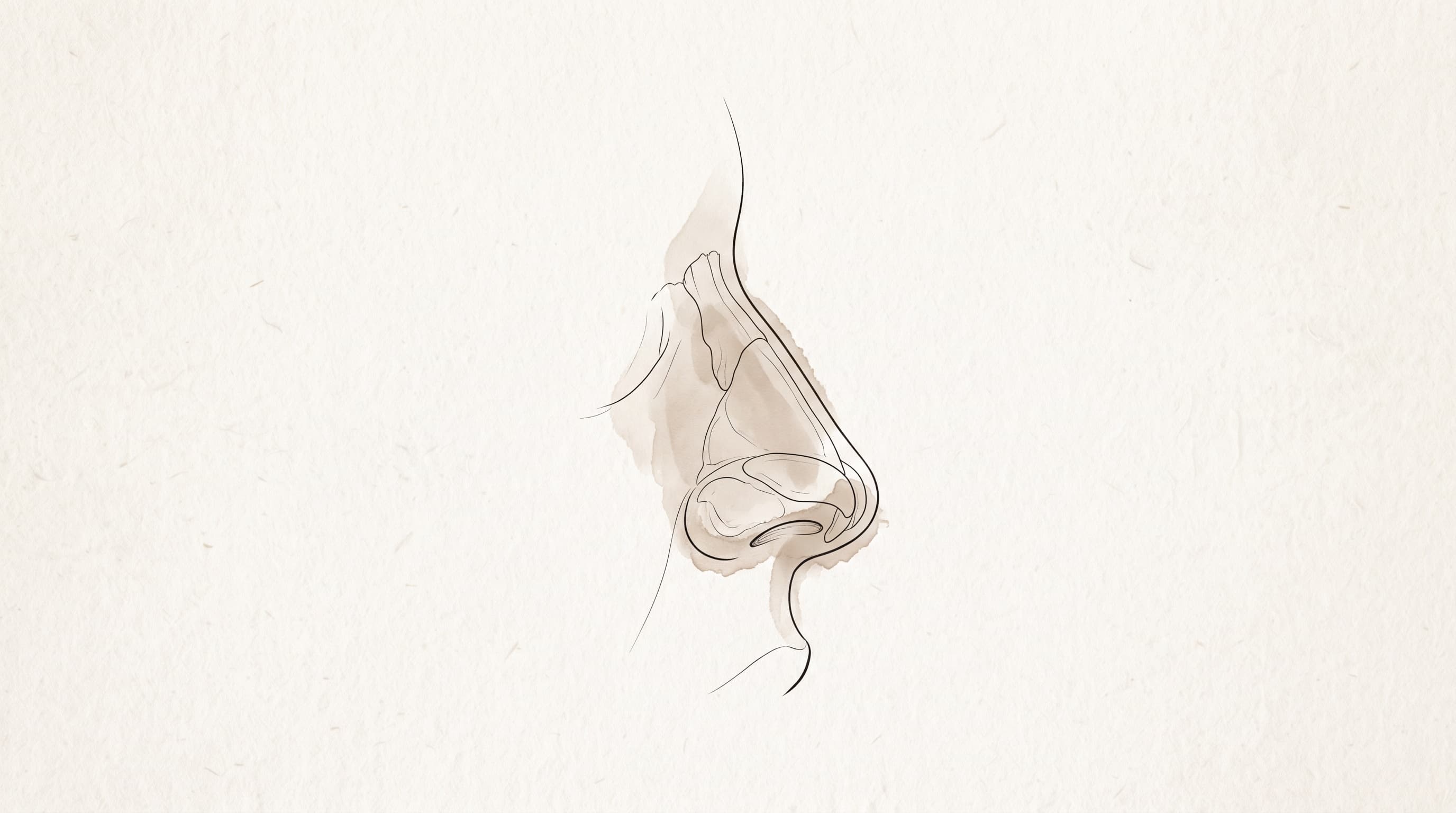
Every rhinoplasty changes the same structures: the nasal bones at the top of the bridge, the upper lateral cartilages below them, the septum (the central wall of cartilage and bone that divides the nose) and the two lower lateral cartilages that shape the tip. What differs between techniques is how the surgeon reaches them.
In an open rhinoplasty, a small incision is made across the columella, the strip of skin between the nostrils, and the skin of the lower nose is lifted off the framework like a hood. In a closed rhinoplasty, the surgeon works through incisions placed inside the nostrils. The skin is lifted only where it needs to be, and much of its natural attachment to the cartilage is left intact.
Neither approach is a shortcut. Closed rhinoplasty demands that the surgeon understands the three-dimensional anatomy of the nose well enough to shape structures that are not fully exposed. In return, it brings some practical advantages that matter to patients, summarised on our closed rhinoplasty treatment page.
Why start with the nasal tip?
Many people assume rhinoplasty is mainly about removing a hump from the bridge. In Prof. Tezel's tip-oriented approach, the nasal tip is the anchor of the whole operation. The reasoning is anatomical. The tip sits at the front of the nose and sets the line against which the bridge is judged. When the tip is low, the bridge in front of it looks more prominent. When the tip is given the right height (projection) and the right upward angle (rotation), the hump often appears smaller on its own.
The practical consequence is restraint. If the tip is set correctly first, far less needs to be taken from the bridge. A nose that has been reshaped rather than heavily reduced tends to look natural, to keep better support and to breathe better. This is also why tip support is the single most important theme in revision surgery: many noses that need a second operation lost their tip support during the first.
How the tip is held in place: the septocolumellar suture
A tip that is lifted during surgery but not supported afterwards will tend to drop over time, and can be pulled down by the upper-lip muscles when you smile. Prof. Tezel addresses this with the septocolumellar suture technique, which he published in the Annals of Plastic Surgery in 2007. The tip cartilages are fixed to the septum, which acts as a stable central column, using a sequence of stitches that each have a specific job:
- 01Pivot suture: sets the height of the tip.
- 02Rotation suture: sets the upward angle of the tip.
- 03Support suture: controls the angle between the nose and the upper lip.
- 04Interdomal suture: brings the two tip cartilages together for a defined tip.
Because the tip is locked to a stable column, it is not left hanging on soft tissue alone. Where the septum is too short, weak or crooked to hold the sutures, it is first reinforced with a caudal septal graft, a piece of the patient's own cartilage shaped to interlock with the existing septum. These grafts are a core part of revision work, explained in our revision rhinoplasty page.
Does closed rhinoplasty mean breaking the nose?
Not always. Breaking the nasal bones (osteotomy) is needed when the bony part of the nose is too wide, crooked, or left with a flat gap on top after a large hump has been removed. In a tip-oriented operation, the bridge often needs only a modest reduction, and many patients need little or no bone work. Less bone work generally means less bruising around the eyes and a shorter recovery.
In suitable cases, a correction of the tip cartilages alone can be enough. Prof. Tezel performs some of these tip-only operations under local anaesthesia in about 20 to 25 minutes. Whether that is realistic for your nose depends on what is actually causing the shape you dislike, which is why photographs and an examination come before any plan.
The detail that gives a nose away
Even a well-made nose can look operated if the bridge runs into the forehead in one straight line. The depth of the area between the brows, the nasal root, is decisive for a natural profile and is very visible in photographs. Conventional instruments make this angle difficult to shape. Prof. Tezel designed an angled rasp for the purpose, published in the Journal of Plastic, Reconstructive & Aesthetic Surgery in 2009, so the transition between forehead and nose can be refined precisely.
Who is a good candidate for closed rhinoplasty?
Closed rhinoplasty suits many first-time patients, including those whose main concerns are:
- ·A hump on the bridge
- ·A tip that droops, looks heavy or drops when smiling
- ·A bulbous or poorly defined tip, where the cartilage is the main cause
- ·A crooked nose or deviated septum affecting breathing
- ·A nose that looks out of proportion with the rest of the face
Closed rhinoplasty may not be the best choice for every nose. Some heavily scarred revision cases, severe deformities after injury, or cleft-related noses may need the wider exposure of an open approach. The decision is made at consultation, not on the day of surgery.
| You may be a good candidate if | Closed rhinoplasty may be less suitable if |
|---|---|
| Your concerns involve the tip, hump or septum | Previous surgery has left extensive scarring that needs full exposure |
| You want a natural result that still looks like your nose | You want a dramatic change that does not suit your face |
| You are in good general health and do not smoke, or will stop | You have an uncontrolled medical condition or bleeding disorder |
| You have realistic expectations and time to recover | You are under pressure from someone else to have surgery |
Function matters as much as shape
A nose that looks right but does not breathe well is not a good result. During consultation, the septum, the nasal valves and the support of the tip are assessed alongside the shape. If a deviated septum or weak valve is contributing to a blocked nose, correcting it can be part of the same operation. If you have a long-standing blocked nose, it is sensible to see your GP or an ENT specialist first, because not every blockage is structural and some respond well to treatment with sprays.
What happens before and on the day of surgery
- 01Photographs and history. Front, side and base views, plus details of any breathing problems, injuries or previous nasal surgery.
- 02Video consultation. Your goals are discussed and Prof. Tezel explains what is realistic for your anatomy.
- 03Written surgical plan before you make travel arrangements.
- 04In-person consultation in Istanbul to examine the nose and confirm the plan.
- 05Surgery. Usually 1.5 to 3 hours under general anaesthesia, or local anaesthesia for tip-only work. Discharge is the same day or the next morning.
- 06Splint removal around day 7, and a check before you are cleared to fly.
Closed rhinoplasty recovery, week by week
| Time after surgery | What usually happens |
|---|---|
| Days 1 to 3 | Swelling and any bruising peak. Rest with your head raised; breathing through the nose feels blocked. |
| Around day 7 | Splint removed. Most patients are cleared to fly home after their check. |
| Weeks 2 to 3 | Most people return to work and social life. Temporary stiffness of the upper lip is common and fades. |
| Weeks 6 to 8 | The cartilages settle into their new position. Avoid knocks, massage and pressure on the nose; strenuous exercise can usually resume around now if advised. |
| Months 3 to 6 | Most visible swelling has gone; the tip continues to refine. |
| Around 12 months | Residual swelling, especially at the tip, has settled and the final shape is visible. |
The NHS gives similar general guidance for rhinoplasty: a splint for about a week, up to two weeks off work, and swelling that can take months to settle fully (NHS: nose reshaping). Plan for 8 to 10 days in Istanbul in total. Our guide to flying home after facial surgery explains how to make the journey safer.
What are the risks of closed rhinoplasty?
Every operation carries risks. For rhinoplasty these include bleeding, infection, prolonged swelling, asymmetry, a change in breathing, altered sense of smell, numbness of the tip or upper teeth, and in some cases the need for a further correction. General surgical risks such as blood clots and reactions to anaesthesia also apply. Results vary between individuals, and thick nasal skin in particular limits how much definition can be achieved. Prof. Tezel will explain plainly what can and cannot be changed in your nose before you decide.
Questions to ask any rhinoplasty surgeon
- ·Will you operate closed or open on my nose, and why?
- ·How will you support the tip so that it does not drop over time?
- ·Will my nasal bones need to be broken?
- ·How will my breathing be assessed and protected?
- ·Who performs the operation, and will I meet you in person beforehand?
- ·What follow-up will I have once I am back in the UK?
Closed rhinoplasty for thick skin, men and older patients
Skin thickness changes what a rhinoplasty can achieve. Thin skin shows every detail of the cartilage beneath it, so small irregularities are more visible. Thick, oily skin hides detail and holds swelling for longer, so tip definition is more modest and takes longer to appear. In thicker skin, a well-supported, slightly stronger tip framework usually gives a better result than heavy reduction, which can leave the skin with nothing to drape over.
Men often want a straighter, stronger profile rather than a small or upturned nose, and the angle between the nose and lip is usually kept closer to a right angle. In older patients, the tip naturally loses support and drifts downwards, and the skin becomes less elastic, so the plan focuses on support and modest change. The principles of the tip-oriented approach apply in each case; the degree of change differs.
Closed rhinoplasty myths and facts
| Myth | Fact |
|---|---|
| Closed rhinoplasty is only for small changes | Many hump, tip and septum problems can be corrected through a closed approach; suitability depends on anatomy rather than the size of the change |
| Every rhinoplasty means breaking the nose | Bone work is needed only when the bony vault is wide, crooked or left open after hump removal; tip-led planning often reduces it |
| A smaller nose always looks better | Over-reduction can weaken support, affect breathing and look operated; proportion matters more than size |
| The result is visible when the splint comes off | Swelling hides detail for months; the tip is the last part to settle, at about a year |
| Closed means no swelling | Swelling is usually shorter than after open surgery, but it still takes months to settle completely |
How long do the results of closed rhinoplasty last?
The changes made to bone and cartilage are long-lasting, but the nose continues to age with the rest of the face. Over many years the skin thins and tip support naturally weakens. This is why support, rather than reduction, is central to long-term results: a tip fixed to a stable septum is better placed to hold its position as the years pass.
Aftercare once you are back in the UK
Most of the recovery after a closed rhinoplasty happens at home. Before you leave Istanbul you should know how to clean the inside of the nose, which medicines to use, how to sleep with your head raised, and when you can return to exercise and wear glasses. Follow-up continues remotely with photographs at agreed intervals. The NHS recommends checking how aftercare will be arranged before any surgery abroad (NHS: cosmetic surgery abroad). If you develop heavy bleeding, increasing pain, fever or swelling that is getting worse, contact your GP, NHS 111 or, in an emergency, 999, as well as the surgical team.
About Prof. Tezel
Prof. Dr. Erdem Tezel is a professor of plastic, reconstructive and aesthetic surgery at Marmara University in Istanbul, where he has been a member of the faculty since 1996. His rhinoplasty work is built on techniques he has published in peer-reviewed journals, including the septocolumellar suture (Annals of Plastic Surgery, 2007) and an angled rasp for the nasofrontal angle (Journal of Plastic, Reconstructive & Aesthetic Surgery, 2009). If you are considering surgery in Istanbul, our UK patient guide to rhinoplasty in Turkey covers planning and travel, and why some noses need a second operation explains what tip support means for long-term results.
01Is closed rhinoplasty better than open rhinoplasty?
Neither is better for every nose. Closed rhinoplasty avoids an external incision and usually means shorter swelling, while some complex or heavily scarred noses still need an open approach. The right choice depends on your anatomy and the surgeon's experience with each technique.
02Does closed rhinoplasty leave a scar?
There is no external scar, because all incisions are inside the nostrils. Internal incisions heal and are not visible.
03Can closed rhinoplasty fix a drooping tip?
Yes, in many cases. Supporting the tip on the septum with the septocolumellar suture is the main purpose of the technique Prof. Tezel uses.
04How long does closed rhinoplasty take?
Usually 1.5 to 3 hours. A tip-only correction in a suitable patient can take around 20 to 25 minutes under local anaesthesia.
05How long is recovery after closed rhinoplasty?
The splint is usually removed around day 7, most people return to work after 2 to 3 weeks, and the final shape settles over about 12 months.
06Can closed rhinoplasty improve breathing?
If a deviated septum or weak nasal valve is causing the blockage, correcting it can be part of the same operation. A GP or ENT assessment is sensible first, because some causes of a blocked nose are not structural.
07How long should I stay in Istanbul?
Plan for 8 to 10 days. You will be checked after the splint comes off before you are cleared to fly.
Planning a consultation with Prof. Tezel
The first step is an honest assessment. Send front, side and base photographs of your nose for review, and arrange a video consultation with Prof. Tezel before making any travel plans.
Results vary between individuals. The information on this website is for general guidance and does not replace a personal medical consultation. Surgery carries risks, which are discussed before any decision. A consultation is required to determine suitability.